3-in-1 Bamboo Charging Station Wholesale Buying Guide
Define the three device roles, power system, retail story, test matrix and reorder evidence before expanding a multi-device charging range.
Before ordering a 3-in-1 charging range, review Bamboo charging clock retail test plan, Bamboo charging clock wholesale comparison, W120 3-in-1 charging clock and confirm the requirements for your project.
Who This Guide Is For
This guide is for distributors, online sellers, gift suppliers and retail buyers comparing 3-in-1 bamboo charging stations for wholesale. The goal is to turn a broad “charges several devices” claim into a clearly defined product, retail story and reorder decision.
Multi-device products can create stronger shelf value than a single charger, but they also create more questions. Buyers need to know which positions serve phones, watches or earbuds, what power source is required, how the exact configuration will be demonstrated and which compatibility limits must be explained.
Quick Buying Matrix
| Buying question | Evidence to request | Commercial decision |
|---|---|---|
| What are the three roles? | Marked product image and specification | Is the benefit easy to explain? |
| Which devices are supported? | Buyer-defined device and case test record | Is the audience wide enough? |
| What power is required? | Input and supplied-accessory specification | Is the retail pack complete? |
| What makes the model distinctive? | Shelf image, dimensions and feature hierarchy | Does it earn its price position? |
| What belongs in the quote? | Matched configuration and trade terms | Can models be compared fairly? |
| When should it be reordered? | Sell-through, margin, return and stock-cover rules | Is demand repeatable? |
Avoid selecting the product from appearance or a headline charging figure alone. Confirm the exact model, electronics and included accessories in the quotation.
Define the Three Device Roles Before Comparing Models
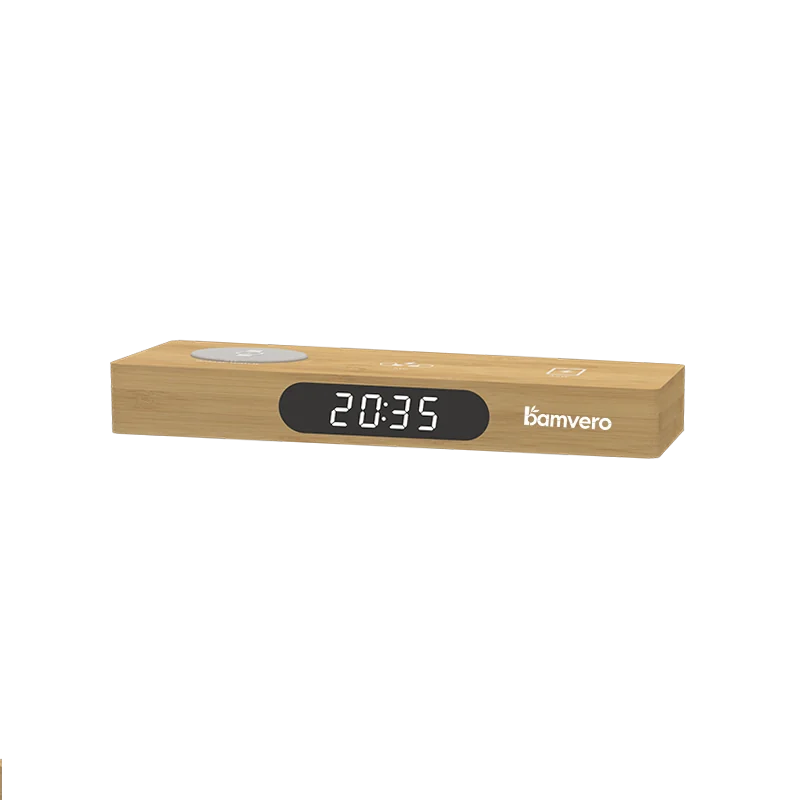
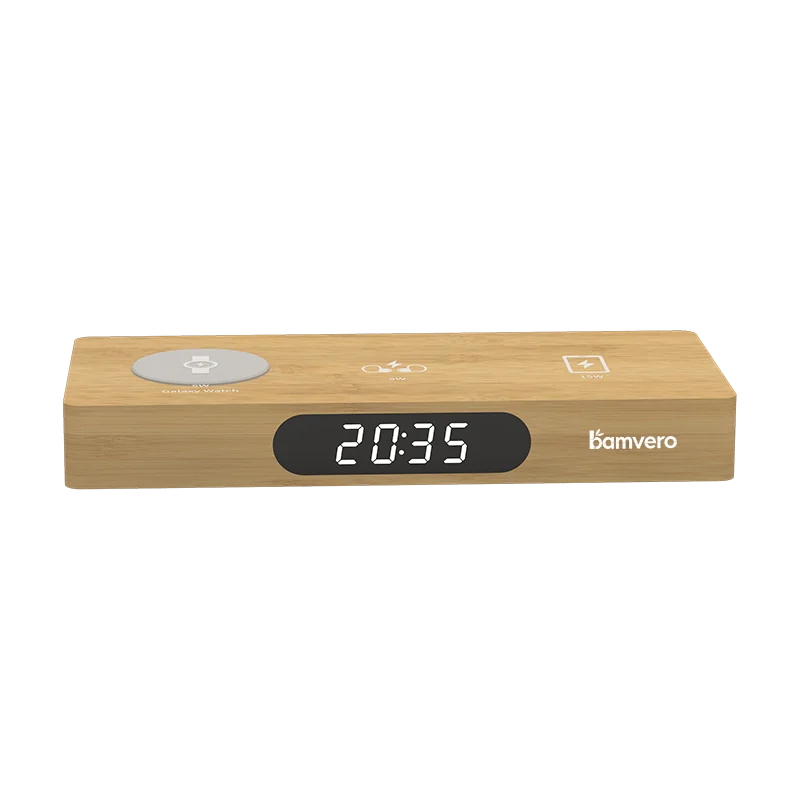
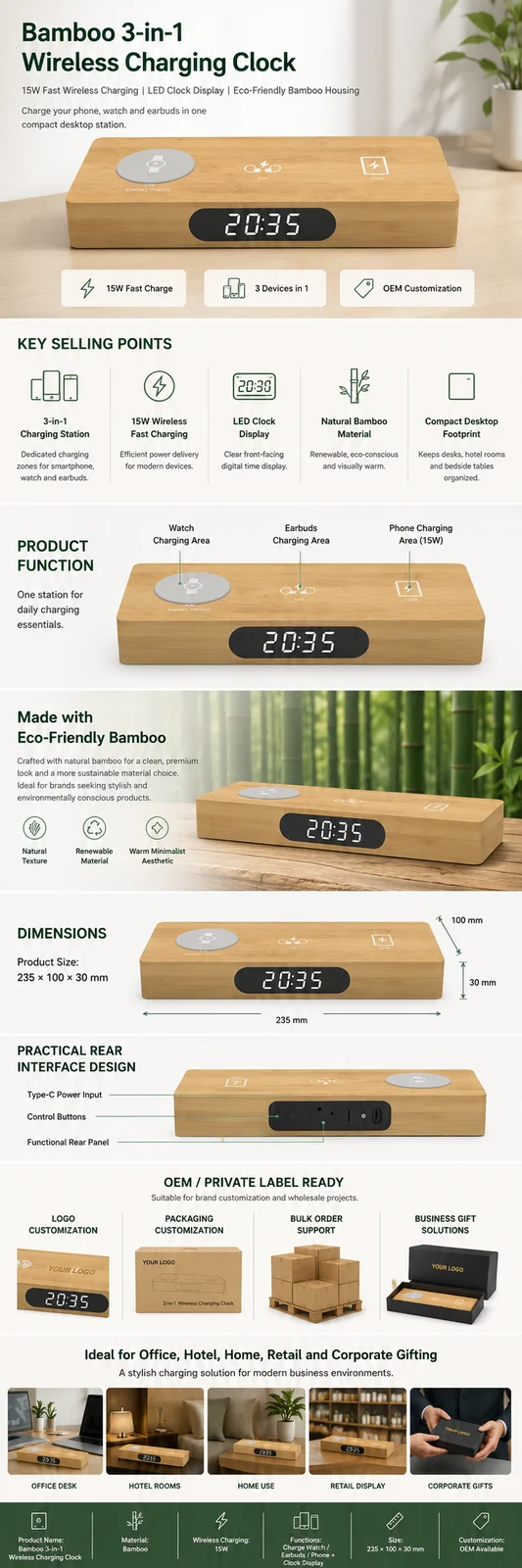
“3-in-1” can describe different layouts. One product may combine a phone charging area, a watch position and an earbud position. Another may combine wireless charging, a clock and a different desk function. Ask the supplier to label the three roles on the exact quoted model.
For a model such as W120, verify the current configuration rather than assuming that every phone, watch or earbud case will work. Prepare a buyer test list using devices and cases that represent the intended customers. Record successful alignment, stable charging behavior and any limitation that needs to appear in the listing or instruction card.
The product title should describe the real configuration. A precise title attracts better-fit customers and reduces avoidable support cases.
Check Power, Cables and the Retail Pack Together
A charging station is a system, not only a bamboo housing. Record the required input, supplied cable, whether an adapter is included and which power source will be used for demonstrations. Confirm these details again for each destination market.
Review the full retail pack:
- Charging station and exact electronic configuration
- Cable, adapter and any removable parts
- Manual and compatibility instructions
- Logo, label, barcode and package artwork
- Inner protection and master-carton plan
- Destination-market documents requiring verification
If a buyer compares quotations with different adapters, cables, packaging or electronics, the lowest unit price may not represent the lowest usable landed cost.
Build a Retail Story Around One Clear Outcome
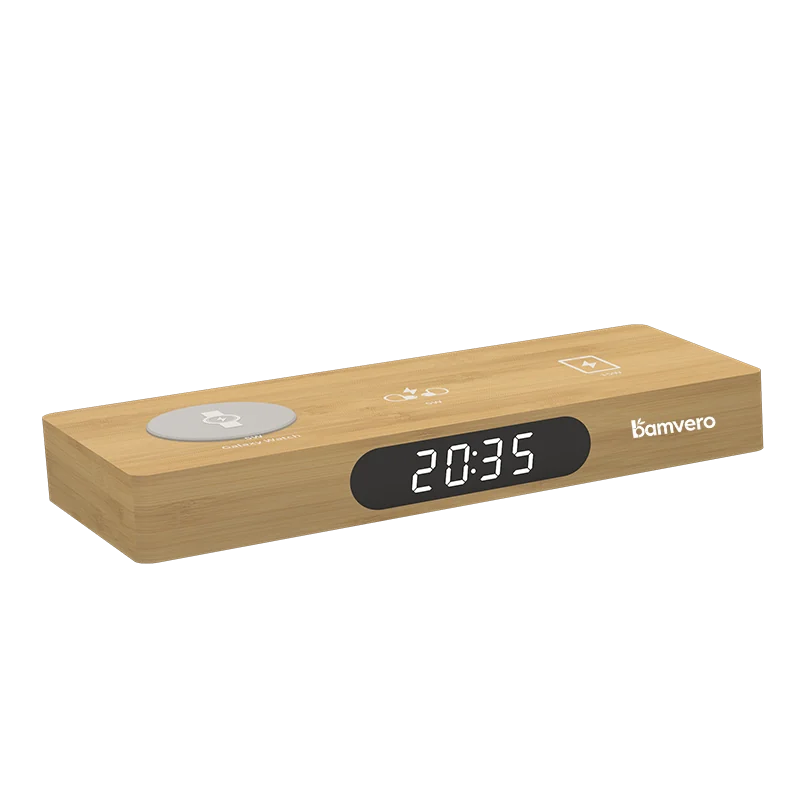
Multi-device products often fail on the shelf because the packaging tries to explain every feature at once. Choose one primary outcome: reducing desktop charging clutter, combining bedside charging with time display, or creating a higher-value branded gift.
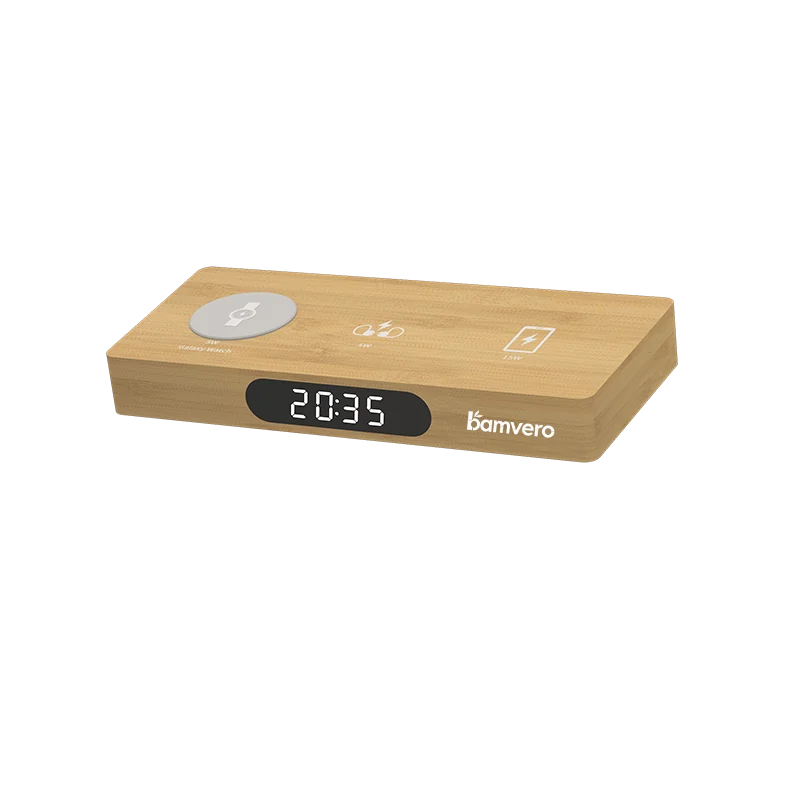
The main image should show the full product and clearly indicate the device positions without implying unverified compatibility. Secondary images can explain the footprint, cable route, controls and bamboo finish. In a physical display, leave enough space for customers or staff to understand where each device belongs.
Use a short demonstration script. It should explain the required power source, show correct device placement and state that compatibility depends on the exact device and case.
Compare Wholesale Quotes on the Same Scope
Create a comparison sheet before requesting prices. Use the same quantity range, model configuration, input and accessories, logo process, packaging, inspection scope, trade terms and destination for every quote.
Commercial review should include:
- Product and customization cost
- Sample and tooling charges if applicable
- Packaging and manual preparation
- Freight, duty, payment and channel fees
- Advertising, promotion and return allowance
- Order quantity, carton volume and replenishment lead time to confirm
Do not publish a fixed MOQ or delivery time unless it has been confirmed for the current model and order. Ask for the quantity breaks and schedule that apply to the defined configuration.
Approve a Sample With a Device Test Matrix
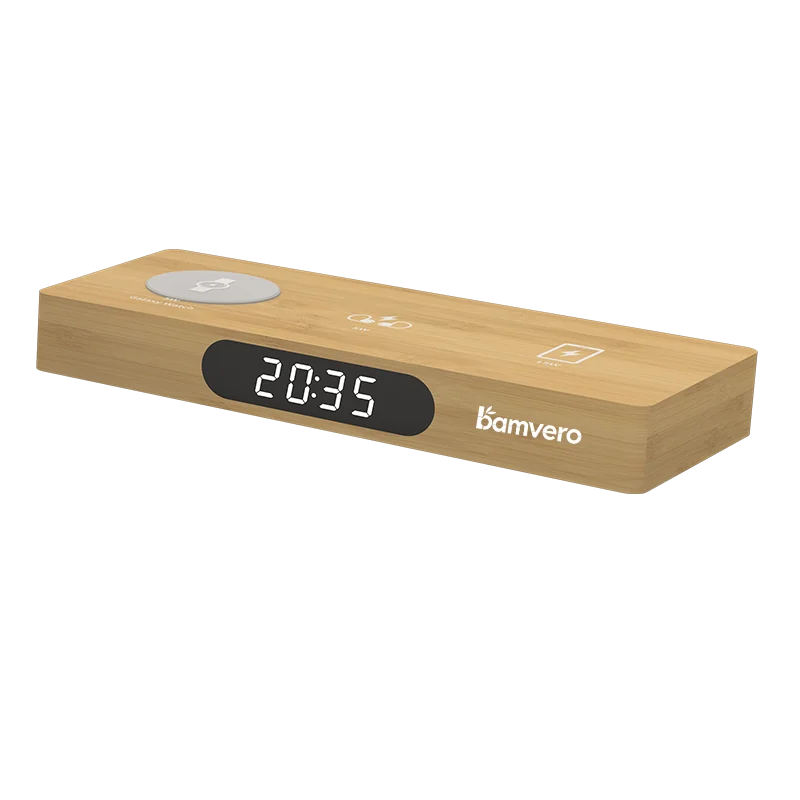
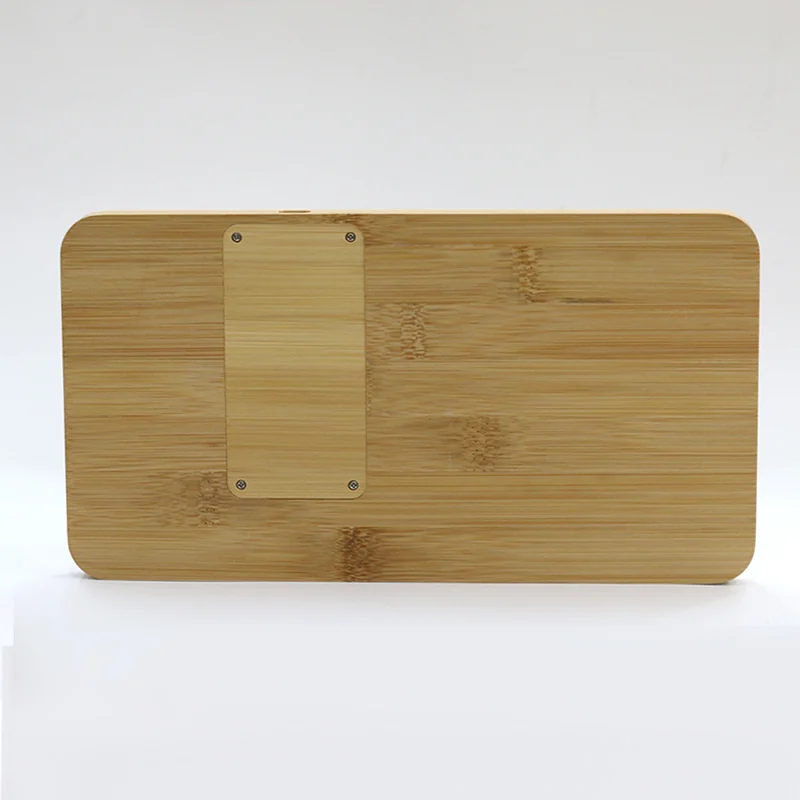
Sample approval should cover appearance, assembly and every advertised function. Photograph the product from all sides and record bamboo variation, gaps, controls, charging areas, display and accessories.
For device testing, record:
| Field | Example of what to capture |
|---|---|
| Device | Exact phone, watch or earbud model |
| Case | No case, material and approximate thickness |
| Power | Source, adapter and cable used |
| Position | Orientation and alignment method |
| Result | Starts, remains stable, heat or interruption observation |
| Action | Approved, instruction change or supplier follow-up |
The matrix is a buyer test record, not a universal guarantee. Keep claims limited to the tested configuration and request appropriate technical review where needed.
Plan Packaging and Returns Before the First Order
Packaging must protect the bamboo surface, charging positions and any raised or removable structure. Review a completed packed sample and a trial shipment where project risk justifies it. Confirm that the customer can identify the power requirement and device positions before contacting support.
Prepare return-reason categories in advance:
- Device or case compatibility
- Incorrect power source or cable
- Alignment or instruction issue
- Shipping or cosmetic damage
- Missing accessory
- Confirmed functional failure
- Expectation mismatch
This classification helps the buyer improve the listing, pack or supplier control instead of treating every return as the same product defect.
Use a Small Test to Set Reorder Rules
Start with the fewest SKUs that represent genuinely different jobs. Define the test period and thresholds before inventory arrives. Track model-level sell-through, contribution margin, support questions, return reasons, stock cover and replenishment timing.
A reorder should require acceptable demand and manageable support, not revenue alone. If one channel performs better than another, preserve the channel-level evidence. If the next order changes the electronics, adapter, packaging or instructions, review whether the previous test still applies.
Final Wholesale Checklist
- Are the three product roles defined for the exact model?
- Has the buyer tested representative devices and cases?
- Are required power, cable and adapter details clear?
- Does the pack explain placement without overclaiming compatibility?
- Are all quotes based on the same configuration and trade scope?
- Does the sample include logo, manual, accessories and final packaging?
- Can return reasons be separated by cause?
- Are reorder rules agreed before the retail test begins?
Share the target market, channels, representative devices, quantity range, branding and packaging needs with Woodshowtime. We can help narrow the model and quotation scope for a focused wholesale test.
Related sourcing resources
Methodology and official references
Charging output and certification status must be confirmed for the exact model and configuration. Device and case test results are not universal guarantees.
Frequently asked questions
What does 3-in-1 mean on a bamboo charging station?
It can describe different device positions or combined functions. Ask the supplier to label the three roles on the exact quoted model and configuration.
Will a 3-in-1 charging station work with every phone, watch and earbud case?
Do not assume universal compatibility. Test representative devices, cases, power accessories and positions, then limit claims to the confirmed configuration.
Which costs should wholesale buyers compare?
Compare the same electronics, cable or adapter, logo, packaging, manual, inspection, freight, duty, channel and return scope.
How should charging-station returns be classified?
Separate compatibility, power, alignment, instruction, shipping damage, missing accessory, confirmed failure and expectation mismatch.
When should a wholesale buyer reorder?
Use model-level sell-through, contribution, returns, support, stock cover and replenishment rules defined before the test begins.
Build the specification before comparing the final price.
Align the target channel, product functions, destination market, branding and packaging route before approving a sample or bulk quotation.