Bamboo Wireless Charging Clock Wholesale: A Retail Sell-Through Test Plan
Use a controlled retail test to separate true product demand from the effects of price, placement, instructions, advertising and stock availability.
Before expanding a wholesale assortment, review Bamboo charging clock wholesale model comparison, W120 multi-device charging clock, W119 charging desk organizer and confirm the requirements for your project.
Who This Guide Is For
This guide is for distributors, store buyers and e-commerce resellers that have already compared bamboo wireless charging clock models and now need evidence before expanding inventory. It focuses on the retail test between sample approval and a larger reorder.
A wholesale comparison can identify product differences, but it cannot predict how a specific store, marketplace or customer group will respond. A controlled sell-through test helps buyers separate product demand from the effects of price, display, instructions, advertising and stock availability.
Quick Decision Guide
| Test Question | What to Control | What to Measure |
|---|---|---|
| Does the product role make sense? | One customer job per SKU | Customer questions and product clicks |
| Is the price position viable? | Comparable landed-cost scope | Contribution margin and conversion |
| Does the display explain the product? | Consistent merchandising period | Engagement and assisted sales |
| Are charging returns avoidable? | Clear compatibility and power instructions | Return and support reasons |
| Is the SKU ready to reorder? | Minimum test window and stock availability | Sell-through, margin, returns and stock cover |
The test should answer a commercial decision, not merely generate sales. Define the decision and measurement window before inventory arrives.
Start With a Test Hypothesis for Each SKU
Each model needs a reason to be in the assortment. Avoid testing several products that solve the same job with only minor visual differences.
A focused range could include:
- A compact bedside charging clock for a simple time-and-charge story
- A multi-device model such as W120 for customers managing several supported devices
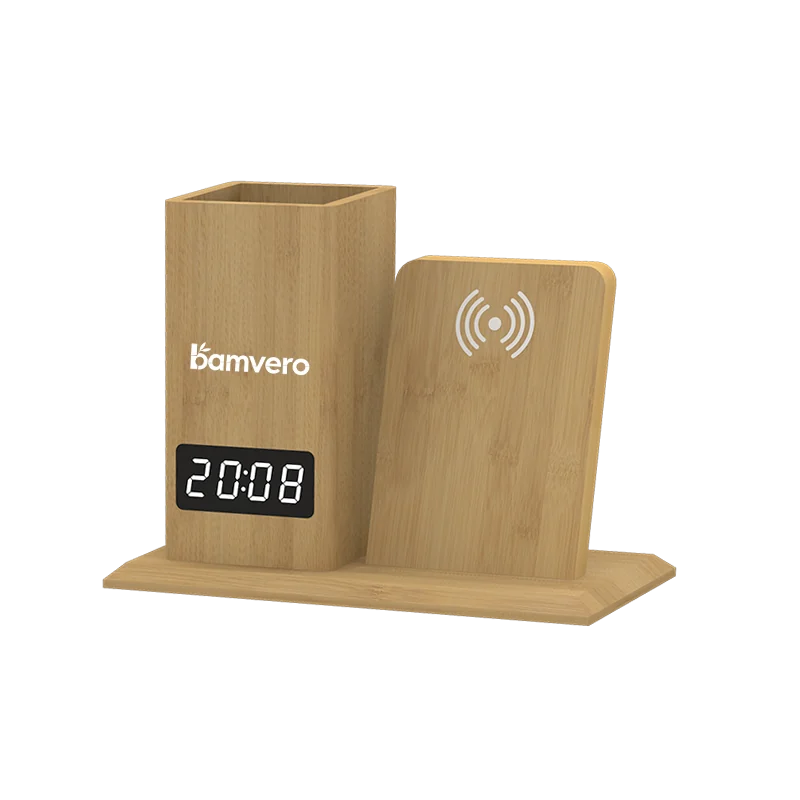
- A desk organizer format such as W119 or W125 for office and gifting use
- A distinctive shape such as F011 for design-led or gift merchandising
Write one hypothesis for each model. For example: “Desk-based shoppers will understand the organizer model faster when it is displayed with representative stationery and a phone.” The test can then compare that presentation with a generic electronics display.
Do not assume a premium product will sell because it has more functions. More functions can add value, but they can also create compatibility questions, larger packaging and a more complicated product explanation.
Standardize the Commercial Configuration Before Testing
Two quotations are not comparable when the power supply, charging profile, accessories, packaging and trade terms differ. Record the exact configuration used in the trial and keep it connected to the supplier quotation.
Confirm for every SKU:
- Exact model and visible finish
- Charging output profiles and required input supply
- Included cable, adapter and other accessories
- Clock, alarm, brightness and organizer functions included
- Product and packed dimensions
- Packaging, manual and barcode scope
- Customization included in the tested cost
- MOQ, Incoterm, quote validity and production timing
- Model-specific certification status to verify for the destination market
Use the same cost categories when estimating landed cost. Freight, duty, marketplace fees, payment cost, promotions, returns and local taxes can change the result. Do not treat the supplier unit price as the retail decision metric.
Choose a Test Range With Distinct Customer Jobs
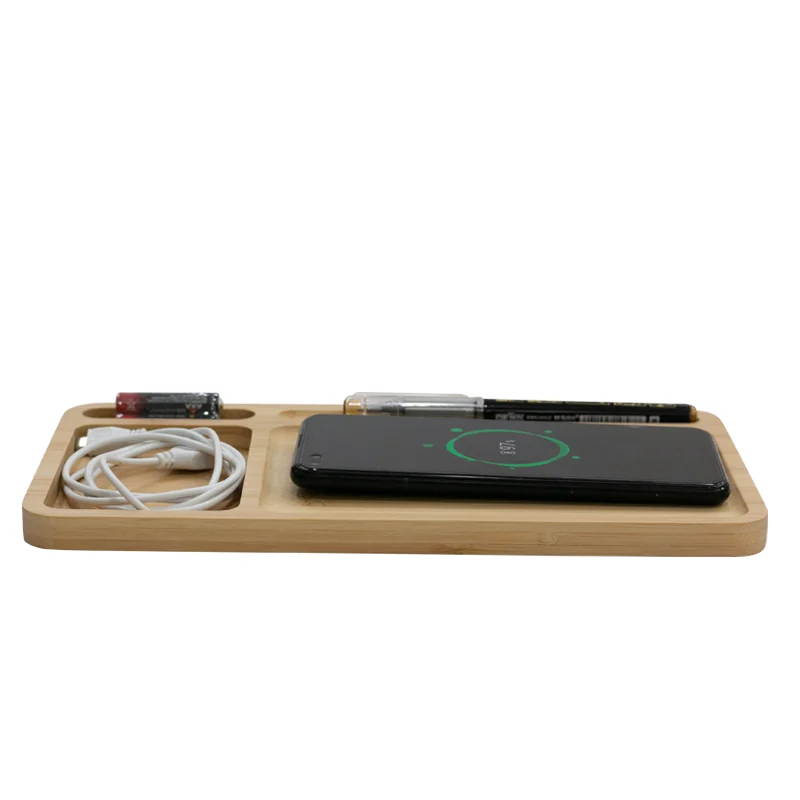
The smallest useful test range covers different use cases without creating excessive inventory. The exact number of models and units depends on MOQ, store count, shelf capacity, advertising budget and the time required to collect useful data.
Give every SKU a role:
- Core model: The clearest product story and expected broadest use.
- Step-up model: A higher-value format with a meaningful added job.
- Alternative-use model: A desk, gift or design format for a different shopper.
- Test model: A less proven concept included with controlled exposure.
If two models have the same role, decide what variable you are testing-shape, footprint, display or price. Otherwise their results will be difficult to interpret.
Build the Retail Presentation Before the Test Starts

Wireless charging is invisible when the product sits unplugged in a closed box. The merchandising plan should show the customer job without making unsupported compatibility claims.
For physical retail, consider a powered demonstration where store policy permits it. Show the correct phone placement, required power input and included accessories. Organizer models should be displayed with a realistic but uncluttered desk setup. Multi-device products should identify each supported charging position only after the exact device list has been verified.
For e-commerce, the listing should answer:
- What the product does in one sentence
- Where the phone or device is placed
- What cable or adapter is included
- Which device and case factors affect charging
- Product footprint and bedside or desk context
- How the clock controls work
- What the buyer should do if charging does not begin
Use real product views for the charging surface, power input, display and accessories. Generic lifestyle images should not hide the operational details that drive returns.
Keep Price and Promotion Tests Understandable
Changing price, advertising, placement and product copy at the same time makes the result hard to explain. Establish a baseline first, then test one major variable at a time where practical.
Document the regular selling price, promotion dates, advertising spend, placement and stock availability. Compare contribution margin after channel costs rather than headline revenue alone. A SKU can generate orders but still be unsuitable if support, damage or returns consume the margin.
Avoid claiming that bamboo automatically justifies a fixed premium. The customer sees the complete offer: finish, function, packaging, brand confidence and service. Measure whether those elements support the tested price in the actual channel.
Track Metrics That Lead to a Reorder Decision
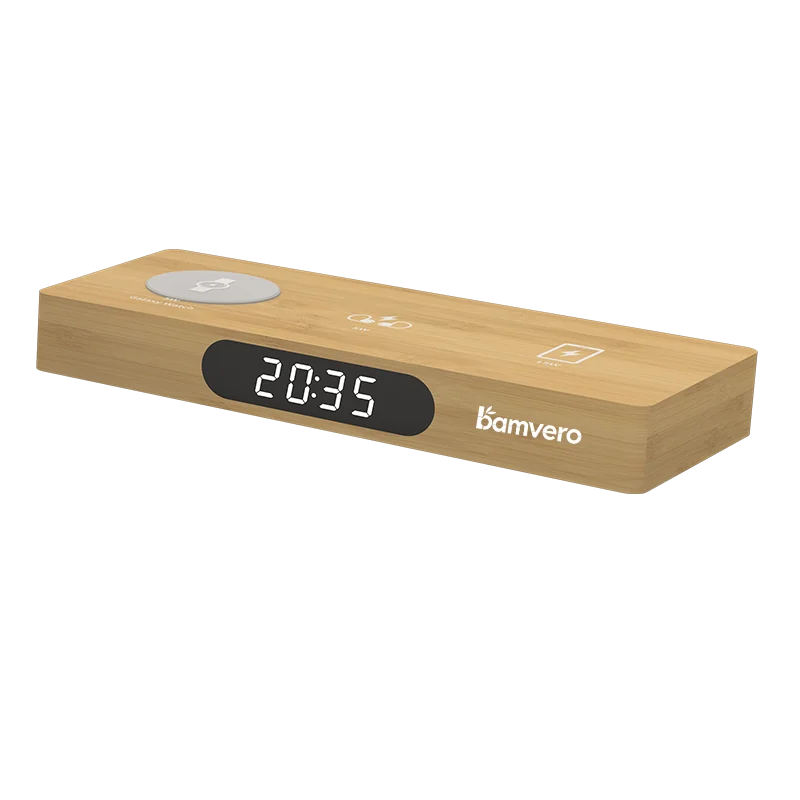
The useful metrics depend on the channel, but the same principle applies: measure the path from attention to profitable, retained sales.
Recommended model-level data includes:
- Units available and days in stock
- Product-page views or store interactions
- Add-to-cart or assisted-sale rate
- Units sold and sell-through
- Discount and advertising cost
- Contribution margin after channel costs
- Returns, defects and customer-support contacts
- Reasons for non-purchase or product questions
- Stock cover and supplier replenishment timing
Separate product defects from expectation or setup problems. “Does not charge” may describe an unsupported device, thick case, incorrect adapter, poor alignment, unclear instructions or a genuine failure. Each cause leads to a different action.
Use Return and Support Data to Improve the Offer

Return reasons are product-development evidence. Create consistent categories rather than accepting free-text comments only.
Useful categories include:
- Device or case not compatible with the tested configuration
- Incorrect or insufficient input power
- Phone placement or alignment confusion
- Clock controls or brightness not understood
- Missing or incorrect accessory
- Cosmetic bamboo or finish concern
- Shipping damage
- Confirmed functional defect
- Product size or function did not match expectation
Review the listing, manual and packaging against these reasons. A clearer compatibility statement or power diagram may solve an avoidable problem. A repeated functional failure requires supplier investigation and possibly a hold on reordering.
Set Reorder, Revise and Exit Rules in Advance
Define the thresholds and review owners before the sales result is known. This reduces the temptation to defend a favored product with selective data.
Use three decisions:
Reorder
The SKU meets the buyer’s agreed sell-through, contribution and return criteria, the configuration remains available, and replenishment timing supports demand.
Revise and retest
Interest exists, but price, listing clarity, packaging, instructions or placement needs a controlled change. Repeat the test with the change documented.
Exit or replace
The role overlaps another SKU, economics do not work, returns remain unacceptable or the supplier cannot close a recurring quality issue.
One winning model does not prove the whole category. Reorder the configuration that produced the result and use change control if components, power accessories or packaging differ.
Share Test Findings With the Supplier
A structured report helps the supplier distinguish requests from evidence. Share the tested configuration, channel, period, product questions, return categories and verified defects. Remove customer personal information.
For recurring issues, provide photographs, videos, lot information and the test setup. Ask the supplier to identify whether the cause relates to instructions, accessory specification, assembly, electronics or the model’s intended compatibility. Agree corrective action and how it will be verified before the next order.
Commercial learning should also guide assortment planning. If customers choose a compact model because of footprint, adding another large multi-function model may not solve the next assortment gap. Choose the next SKU from the uncovered customer job.
Common Retail-Test Mistakes
Testing too many similar models
Overlapping SKUs split traffic and inventory without producing a clear assortment lesson.
Comparing sales without stock availability
A product cannot sell when it is unavailable. Use days in stock and stock cover when comparing models.
Changing several variables together
Simultaneous price, image, copy and placement changes hide the reason for improvement or decline.
Treating every charging complaint as a defect
Diagnose device, case, power supply, placement and product behavior before assigning the cause.
Reordering from revenue alone
Include margin, returns, advertising, support and replenishment risk in the decision.
Final Retail Test Checklist
- [ ] Every SKU has a distinct customer job and test hypothesis
- [ ] Quotations and landed-cost inputs use comparable scope
- [ ] The tested charging configuration and power supply are recorded
- [ ] Product pages and displays explain placement and accessories clearly
- [ ] Price, promotion, advertising and stock dates are documented
- [ ] Sell-through, contribution, returns and questions are tracked by SKU
- [ ] Return reasons separate setup, expectation, damage and defect
- [ ] Reorder, retest and exit rules were defined before review
- [ ] Supplier corrective actions include evidence and verification
- [ ] Reorders reference the exact successful configuration
When requesting a wholesale test range, share the sales channel, target customer, intended model roles, destination market, quantity range and packaging needs. Woodshowtime can then prepare a focused comparison instead of an overlapping catalog list.
Related sourcing resources
Methodology and official references
Charging output and certification status must be verified for the exact quoted model. Retail results depend on channel, price, presentation and local costs and are not guaranteed by the product category.
Frequently asked questions
How many models should a bamboo charging clock retail test include?
Use the fewest models that cover distinct customer jobs and fit the supplier MOQ, shelf capacity, advertising budget and measurement window.
Which costs belong in the retail test?
Use a consistent landed-cost model covering the product, freight, duty, payment, channel fees, advertising, discounts, returns and relevant local taxes.
How should charging complaints be classified?
Separate device or case compatibility, power supply, placement, instructions, shipping damage and confirmed functional failure before deciding the corrective action.
Which metrics should trigger a reorder?
Use buyer-defined sell-through, contribution margin, returns, support, stock cover and replenishment criteria at model level rather than revenue alone.
Can a successful model be reordered with a different adapter or component?
Treat it as a configuration change. Confirm the effect on performance, documents, instructions and test results before assuming the previous retail evidence still applies.
Build the specification before comparing the final price.
Align the target channel, product functions, destination market, branding and packaging route before approving a sample or bulk quotation.