How to move a bamboo radio alarm clock from sample to export carton
A reliable OEM order depends on more than approving the appearance. The engineering sample, function test, bamboo finish, antenna movement, display window and export packaging should all be checked against one controlled specification.
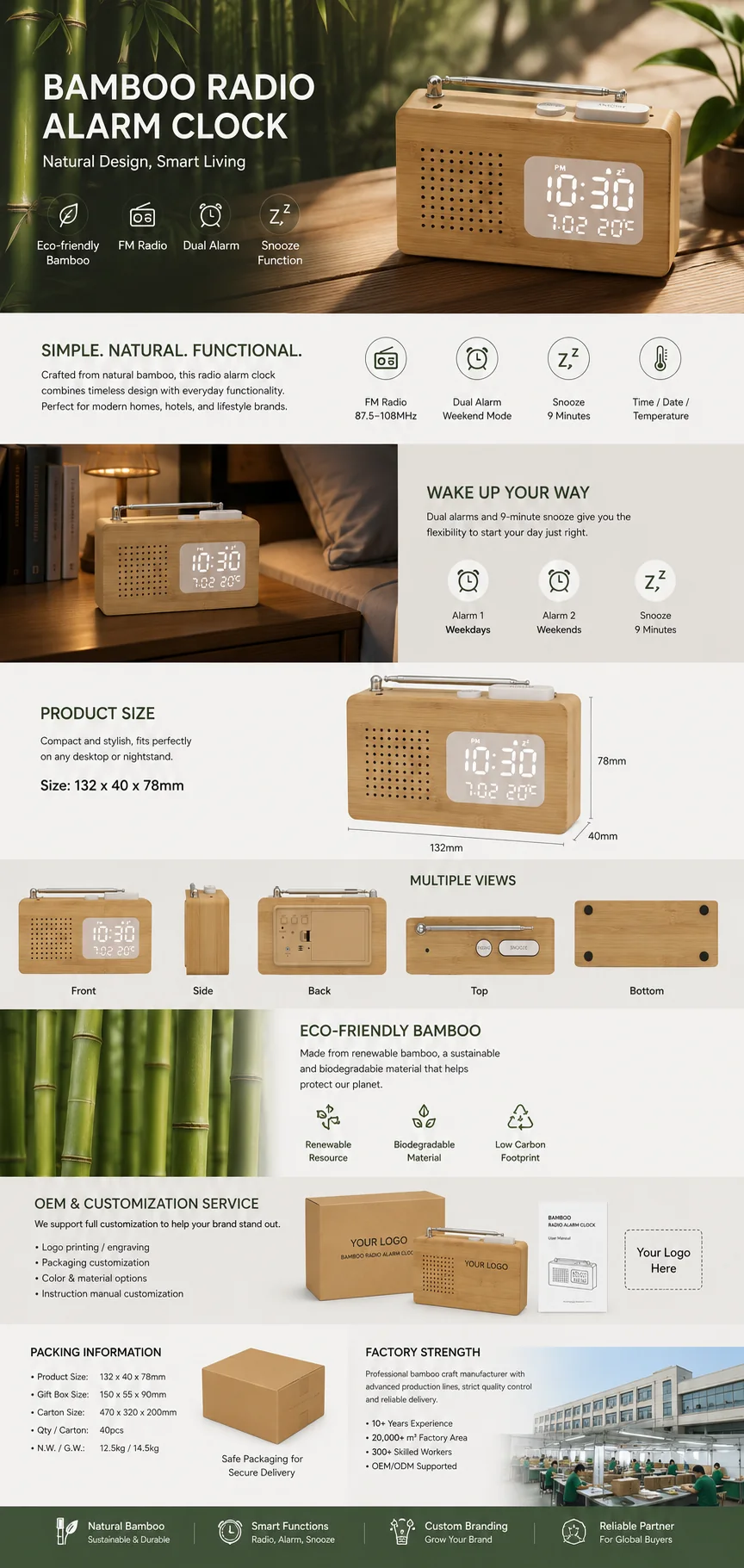
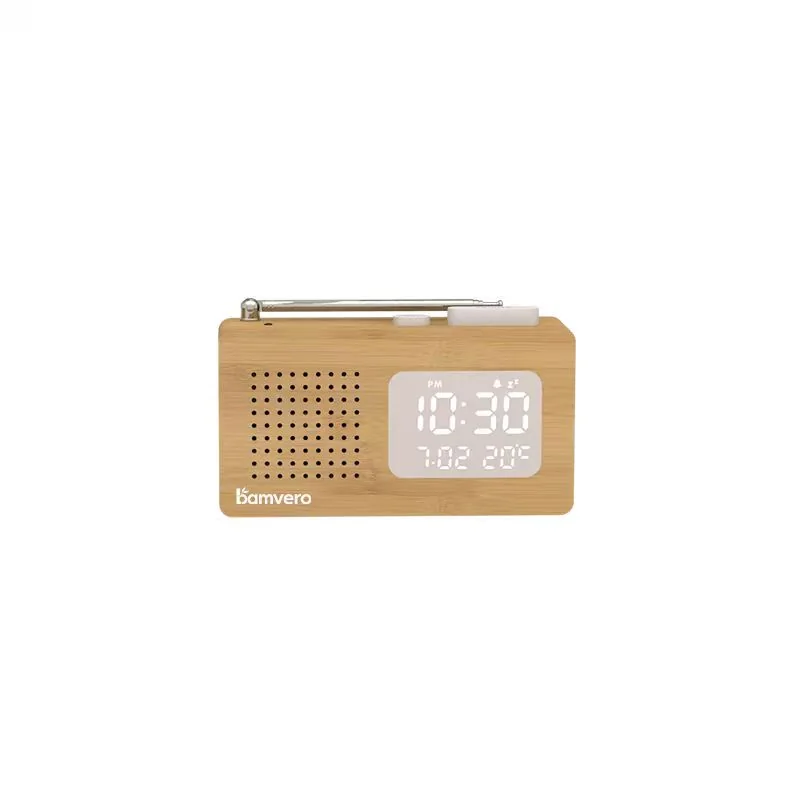
Use the 2605 compact bamboo radio alarm clock as the reference sample, then compare it with the wider radio alarm clock range before locking the production brief.
Approve one golden sample and one written inspection sheet before mass production. Both should carry the same function, finish, logo and carton requirements.
1. Freeze the engineering sample before tooling and artwork
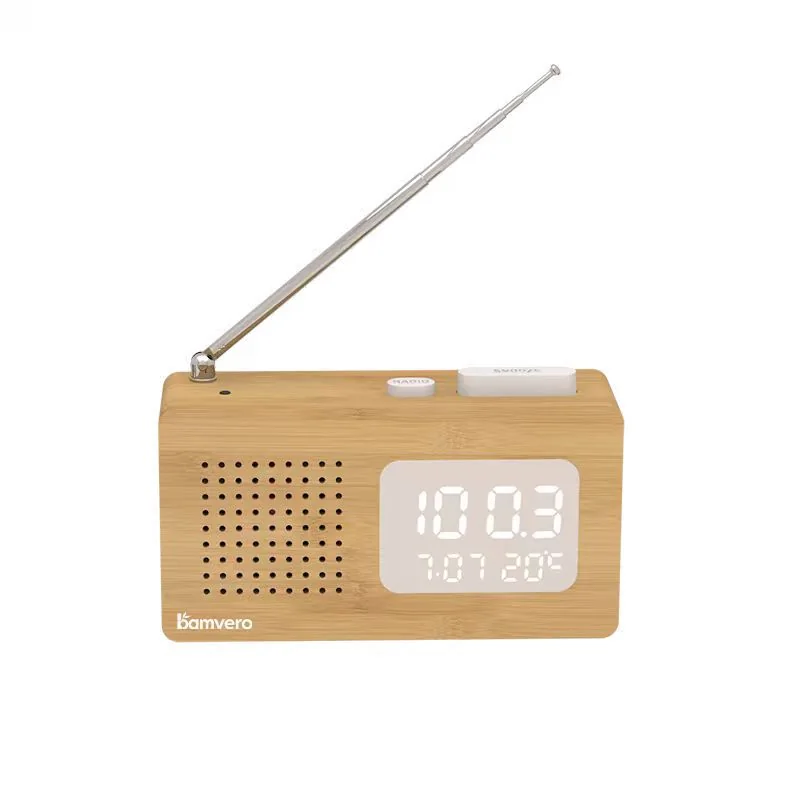
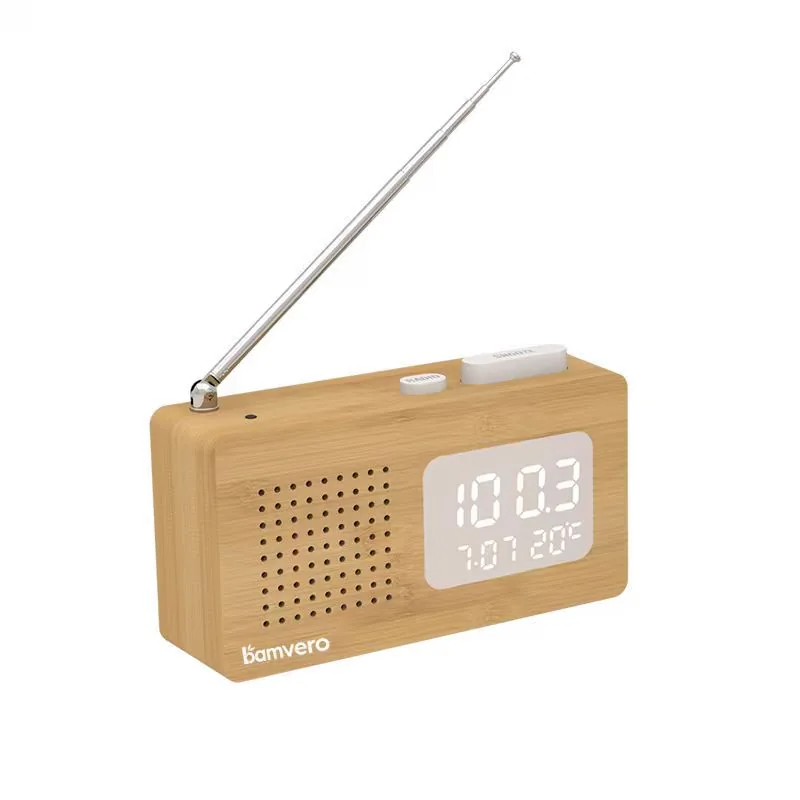
The sample should represent the intended production version, including button labels, antenna length, display brightness, speaker opening, battery compartment and bamboo tone. Any approved change should be written into the product specification rather than left in chat messages.
2. Test functions with a repeatable QC sequence
A production inspection should follow the same order for each unit: power-on, display segment check, clock setting, both alarms, snooze timing, FM scan and reception, button response and temperature display. A fixed sequence reduces missed checks and makes defect reporting easier.
3. Inspect bamboo finish, branding and assembly together
Natural bamboo varies, so quality control should define an acceptable color range and surface standard rather than expecting every unit to look identical. Check the logo edge, display-window fit, speaker holes, antenna joint and case seams under normal room light.
- Confirm logo method, size and position on a physical sample.
- Approve button text, display language and instruction manual language.
- Match retail box artwork, barcode labels and carton marks to the destination market.
- Record the approved bamboo tone and surface treatment for repeat orders.
4. Confirm packaging protection before the shipment test
The antenna, display window and bamboo corners need stable internal support. Inspect the packed sample, then confirm drop-test expectations, master-carton quantity, carton dimensions and shipping marks before mass packing starts.
- Test FM reception and speaker clarity in the target market where possible.
- Confirm alarm volume, dual-alarm logic and snooze duration.
- Review display readability in daylight and a dark bedside setting.
- Approve inner protection, gift box, master carton and shipping labels together.
Sourcing Expert Advice
A short inspection plan is more useful than a long list of vague quality requests. Tie every checkpoint to the approved sample, product specification or packaging artwork, and photograph any production variance before shipment.
- Use one main product link in the first buyer conversation.
- Share destination market, quantity range and required delivery window.
- Ask for a specification sheet and packaging proposal with the sample quote.
Matched Product
Use model 2605 for compact radio clock, hotel bedside, corporate gift and private-label programs.
View model 2605Related Topics
Need a controlled OEM sample route?
Send your market, quantity, logo plan and packaging target for a focused sample and quotation path.