Bamboo Desk Accessories Wholesale: Build a Reseller Assortment Without Duplicate SKUs
Build a focused bamboo desk accessory range by giving every clock, pen holder and charging organizer a distinct customer job.
Build the Range Around Buyer Jobs
A wholesale assortment should not begin with the number of models in a supplier catalog. It should begin with the jobs shoppers are trying to complete. One buyer may need simple pen storage with a clock. Another may want a tray that organizes small desk items. A third may pay for an integrated charging function. If two SKUs solve the same job in the same way, the reseller must explain and stock a difference that customers may not value.
Write one sentence for every proposed SKU: who is it for, where is it used and why would someone choose it instead of the next model? Remove or change any model whose sentence is almost identical to another.
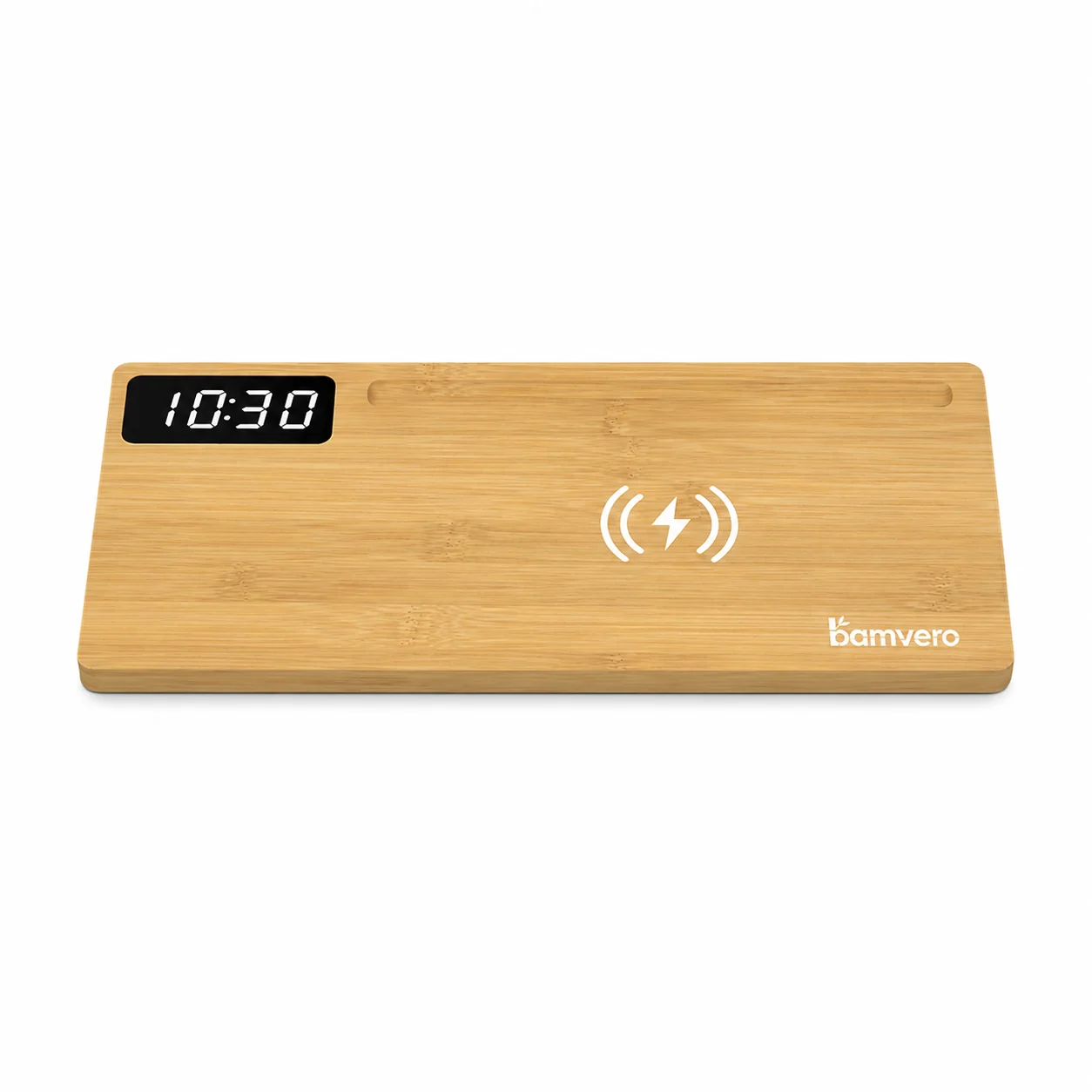
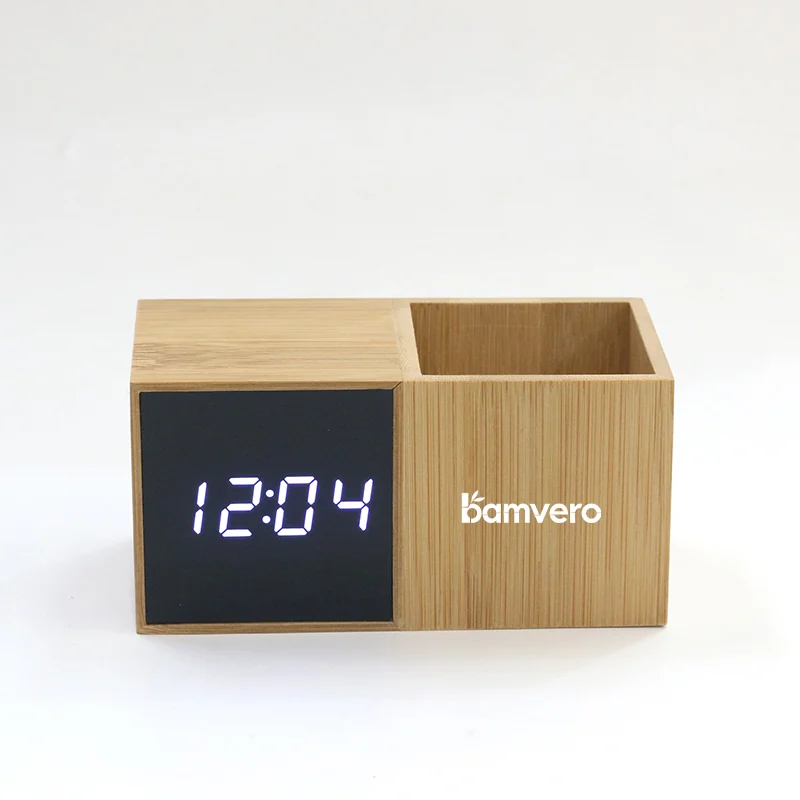
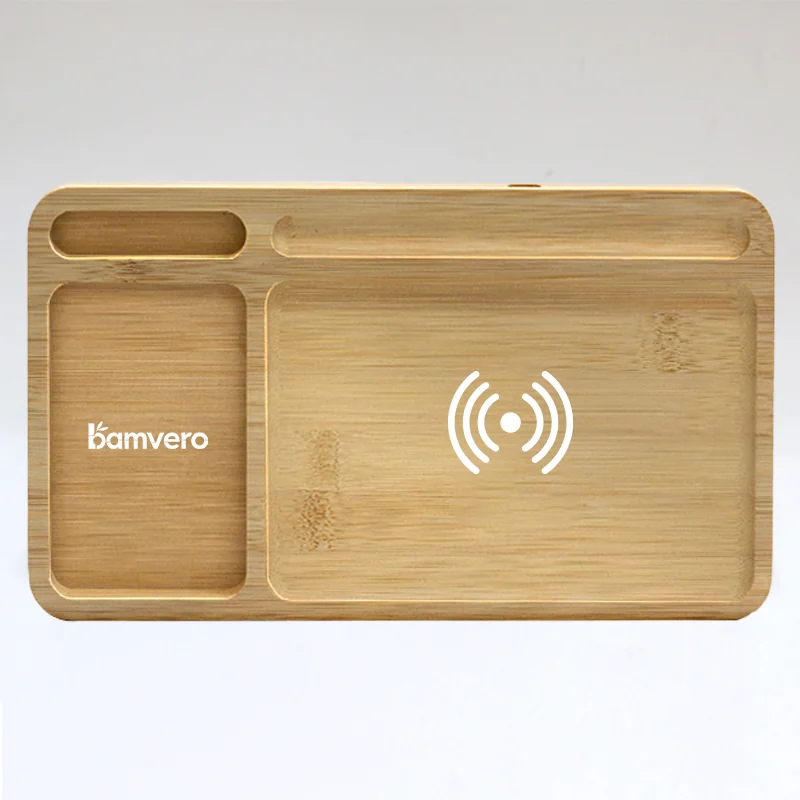
The 1293Z bamboo pen holder clock can represent a compact clock-and-stationery role. The W119 wireless charging desk organizer represents a wider tray and charging role. They belong in one material story but answer different desk needs.
Use Three Clear Assortment Roles
A practical first range can use three roles without forcing a fixed model count.
| Range role | Customer job | Product direction | Main reseller question |
|---|---|---|---|
| Simple | Hold stationery and show time | Pen holder clock | Is the function easy to understand at first glance? |
| Organized | Combine storage zones on one footprint | Desk tray or vertical organizer | Do the compartments fit the items customers actually use? |
| Connected | Add clock or charging value | Wireless charging organizer | Are charging, power and device placement clear and tested? |
The goal is not to fill every role immediately. Use the roles to see where the range has a real gap and where it has two products competing for the same customer.
Make Every SKU Earn Its Shelf Space
Compare products with the same questions. Measure the occupied desk area, not only the product dimensions. Place a representative phone, case, pens, cable, keys or note paper into the sample. Check whether the product remains stable and whether one item blocks another function.
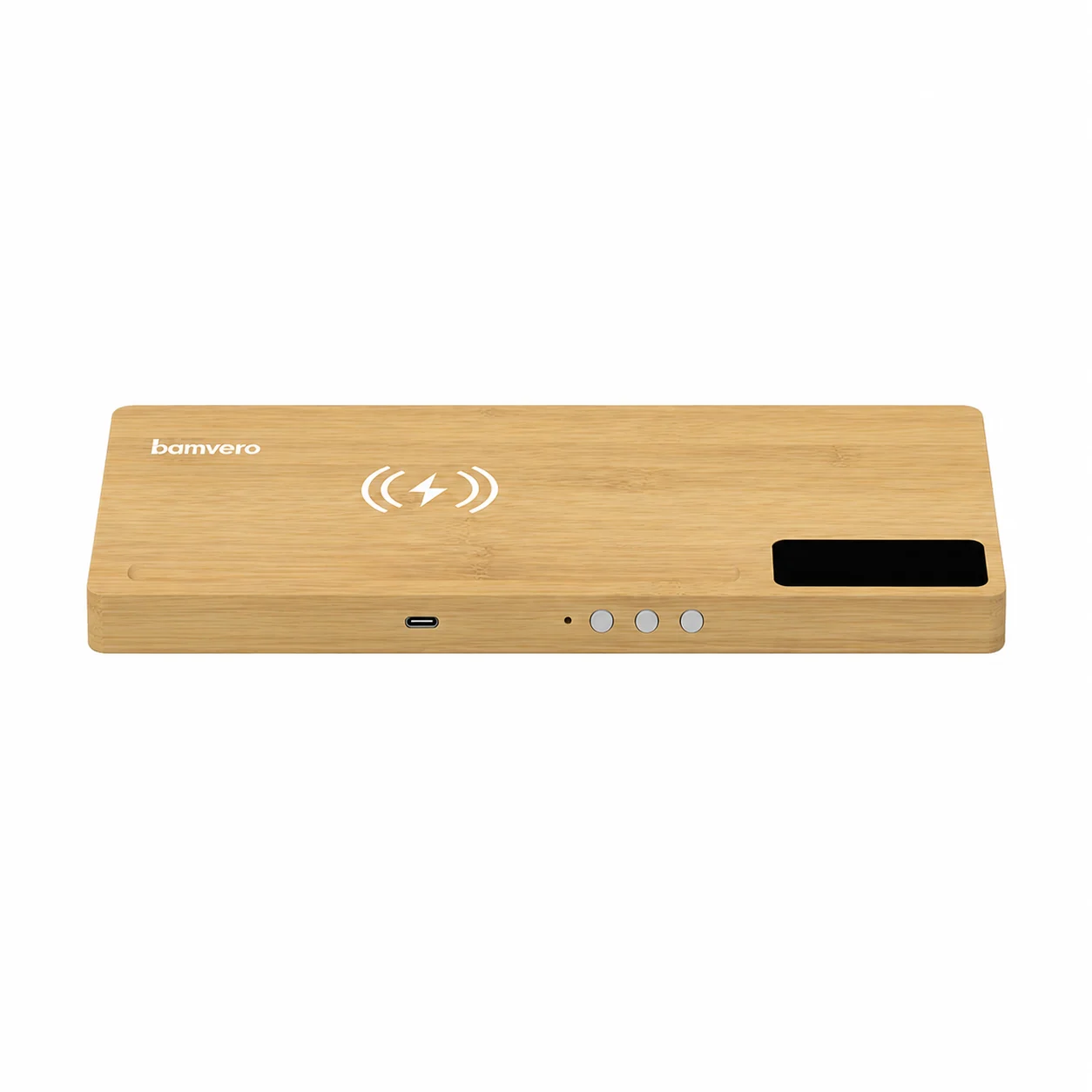
For a pen holder clock, inspect display readability, compartment depth and access to controls. For a charging organizer, record the supplied input configuration, charging position, representative device and case, and cable route. A successful test with one phone should not be described as universal compatibility.
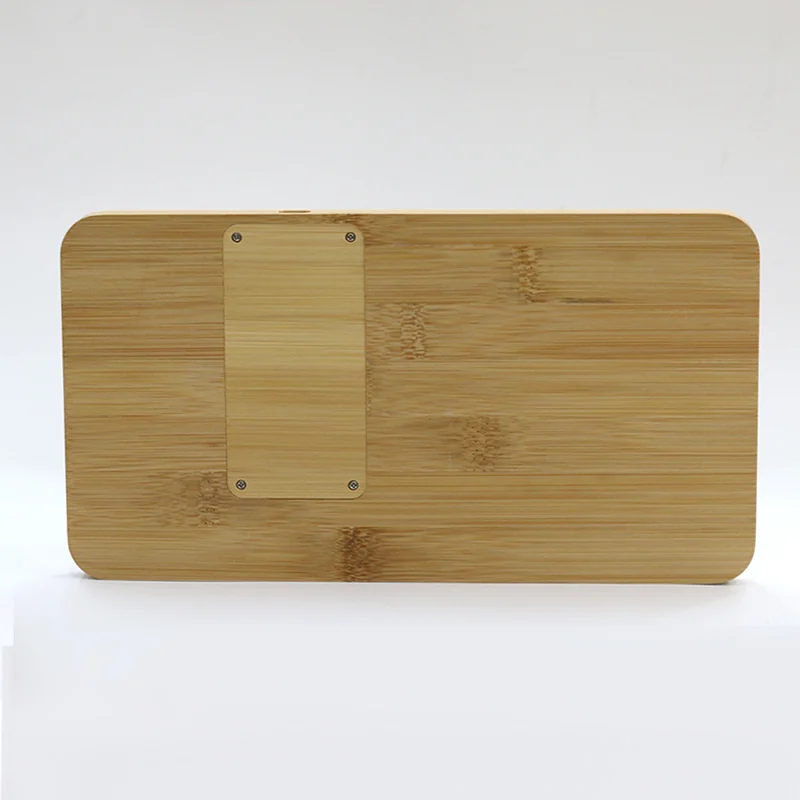
The W110A bamboo wireless charging clock desk organizer combines charging, clock, note and pen-storage directions. It should therefore be compared as a multi-function desk station, not as a direct replacement for a compact pen holder.
Keep the Material Story Consistent
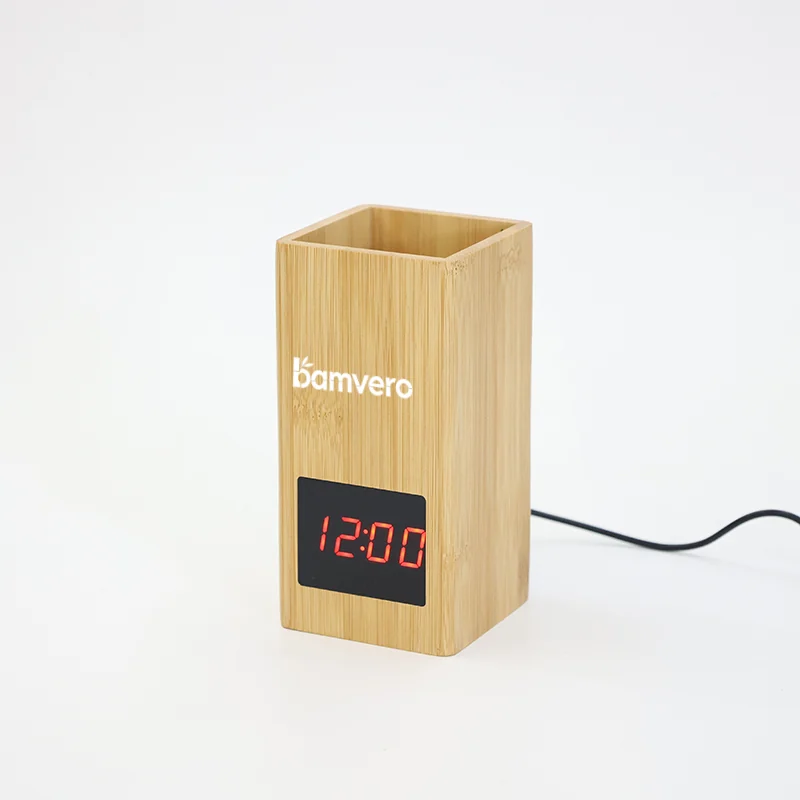
A mixed bamboo range looks coordinated when the products share an intentional finish direction, photography style and packaging system. Natural bamboo still varies in grain and tone, so the reseller should approve a representative range rather than expecting every unit to match one image exactly.
Separate natural variation from defects. Cracks, sharp splinters, damaged corners, unstable assembly, excess adhesive and coating faults are workmanship issues. Grain direction and moderate tone variation may fall inside an approved natural range.
Photograph several approved samples together before ordering. This reveals whether one model appears much warmer, darker or glossier than the rest. If the difference is intentional, explain the sub-range clearly. If it is not, align the finish specification before packaging is printed.
Design Packaging for Comparison, Not Feature Overload
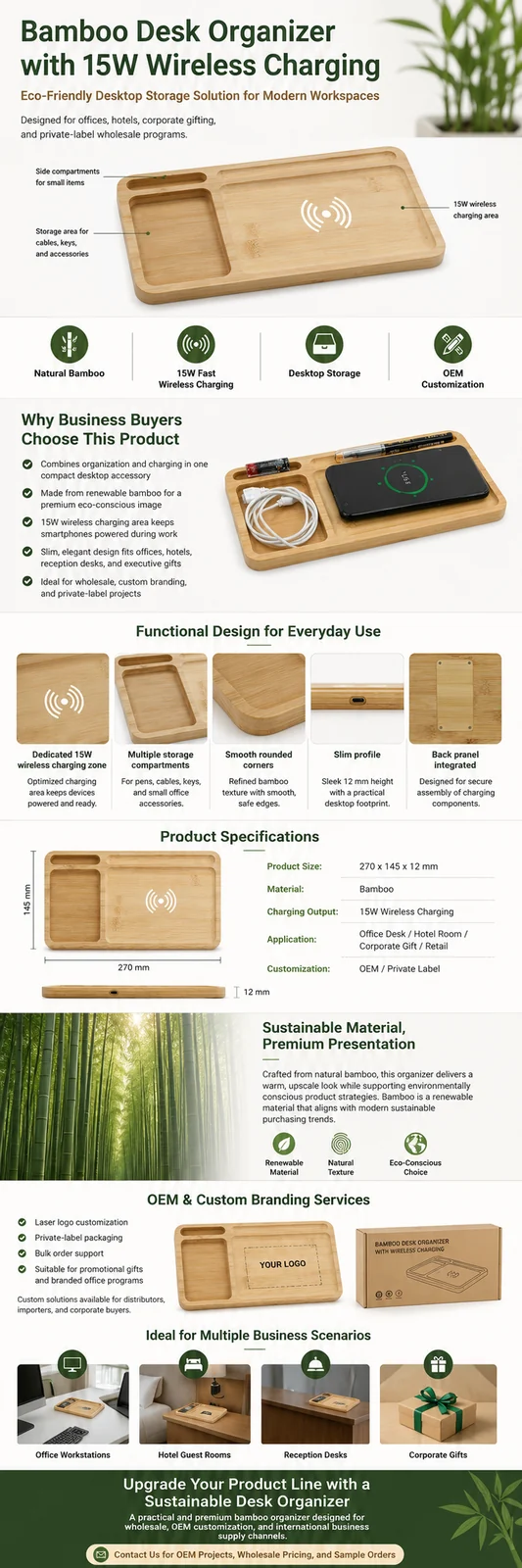
Retail packaging should help the shopper understand the job of each product quickly. Put the primary use first, then the supporting functions. A compact pen holder clock should not need the same front-panel message as a charging organizer.
Use consistent brand placement, typography and color across the family, but give each model a clear product name, image and function hierarchy. Confirm the exact included cable or power accessory, setup steps, barcode area and destination-language requirements on the final artwork.
For ecommerce, plan the listing image set with the assortment. Use one image that shows the whole range and separate images that demonstrate each model's unique job. Do not reuse one product's compartment or charging image for another SKU.
Compare Quotations on One Commercial Basis
Normalize the quotation before deciding which models fit the range. Ask every quote to identify:
- exact model and electronic configuration;
- material and approved finish range;
- logo method and packaging scope;
- included cable, adapter scope and instructions;
- unit packing, master-carton quantity and carton dimensions;
- inspection method and agreed remedy;
- quantity, trade term, destination and quote validity.
Do not treat a lower unit price as a better wholesale option if another quotation includes packaging, accessories or inspection work that the first one excludes.
Test the First Order as a Range
Set a test purpose for each SKU before placing the first order. Decide where it will be listed or displayed, its target customer, the content it will receive and the stock level the channel can support. Keep promotion and placement reasonably consistent while gathering early results.
Record model-level data rather than total category sales. Useful signals include units sold, gross contribution after discounts, page engagement, support questions, return reasons, packaging damage, stock cover and replenishment time. A model with fewer sales may still deserve a place if it reaches a distinct customer and contributes without creating excessive support or stock.
The 2020S vertical bamboo pen holder clock can be evaluated against a compact holder by desk footprint, storage orientation and visual presence. The decision should come from the target customer's job and the test results, not from adding another shape for variety.
Set Reorder and Exit Rules Before Launch
Define what will trigger a reorder, a smaller follow-up order, a content change or an exit. Review each model against its assigned role. If two SKUs attract the same customer and one consistently performs better after a fair test, consolidate the range rather than carrying duplicate inventory.
When a model receives questions but few purchases, check whether the problem is the product, price, explanation, device fit or packaging. When returns involve charging or setup, review the sample evidence and instructions before increasing stock.
What to Send for a Focused Wholesale Shortlist
Share the sales channel, target customer, planned price positions, first-order capacity, destination, required desk jobs and whether charging is essential. Woodshowtime can then recommend a smaller group of bamboo clocks and organizers with distinct roles instead of sending a long catalog of overlapping models.
Build the specification before comparing the final price.
Align the target channel, product functions, destination market, branding and packaging route before approving a sample or bulk quotation.