Private Label Bamboo Digital Clock Packaging: From Logo Artwork to Retail Carton Approval
Private-label bamboo digital clock projects often slow down at the final stage because the product, gift box and export carton were approved separately. A more reliable route is to treat packaging as part of the product brief from the first sample. That makes logo placement, manual language and retail presentation easier to review before a production date is reserved.
Build the product story before building the box
A bamboo clock box should make sense for the intended sales channel. Corporate gift programs may need a clear logo panel and a fast unboxing experience. Decor retailers may prefer a material-forward message. Hotel project teams may need simple model identification and carton efficiency. Decide this before artwork begins.
A private-label launch should begin with a clear selling situation rather than only a product shape. Define whether the bamboo clock will sit in a gift box, a lifestyle assortment, a hotel program or a retail display.
That decision helps the supplier and buyer agree on the logo treatment, screen presentation and packaging expectation early, before artwork costs and sample revisions multiply.
A compact launch brief should also set the desired market, quantity range and timing. It gives both teams a practical frame for discussing which custom options add real value.
A practical private-label brief identifies where the clock will be sold, the intended gift moment, the expected quantity and the visual direction. Those few details make it easier to select a bamboo model with the right footprint and feature set instead of beginning with a long, unfocused catalog comparison.
- State the main sales channel and the reason the bamboo clock belongs there.
- Choose the logo position on product and gift box as one decision.
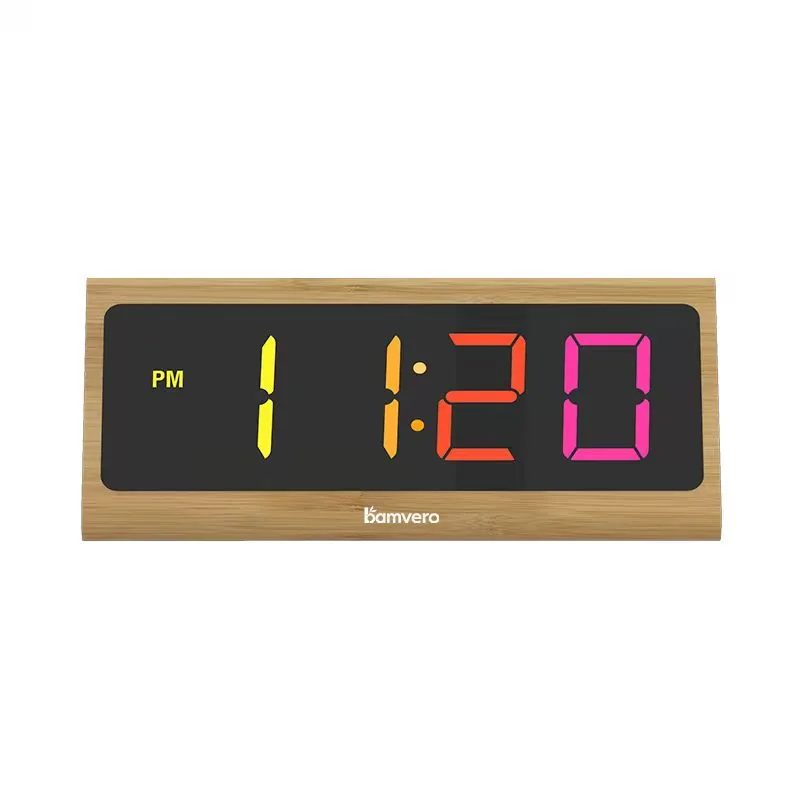
- Identify whether the LED display color needs a callout on packaging.
- Confirm the language required for instructions and external labels.
Approve artwork as a complete packaging set
A product logo file is not enough on its own. The buyer should see the product mark, gift-box panels, instruction cover and master-carton marks together. This exposes size, placement and color differences before a print run begins.
Good branding is not only a logo on the housing. It includes logo size, placement, display language, manual copy, retail-box message and carton marks. Each element should reinforce the same product position.
Ask for an artwork checklist before approval. It is the fastest way to make sure the approved sample, retail packaging and export carton do not use conflicting information.
When a design needs to work in several regions, keep the non-negotiable brand elements separate from local requirements such as language or power accessories. This makes later adaptation less disruptive.
Check the display in its intended environment before confirming the sample. A home-decor counter, hotel nightstand and promotional gift box each create different expectations for brightness, controls, power supply and the way the bamboo surface is presented to the end user.
Use product views that show the retail promise
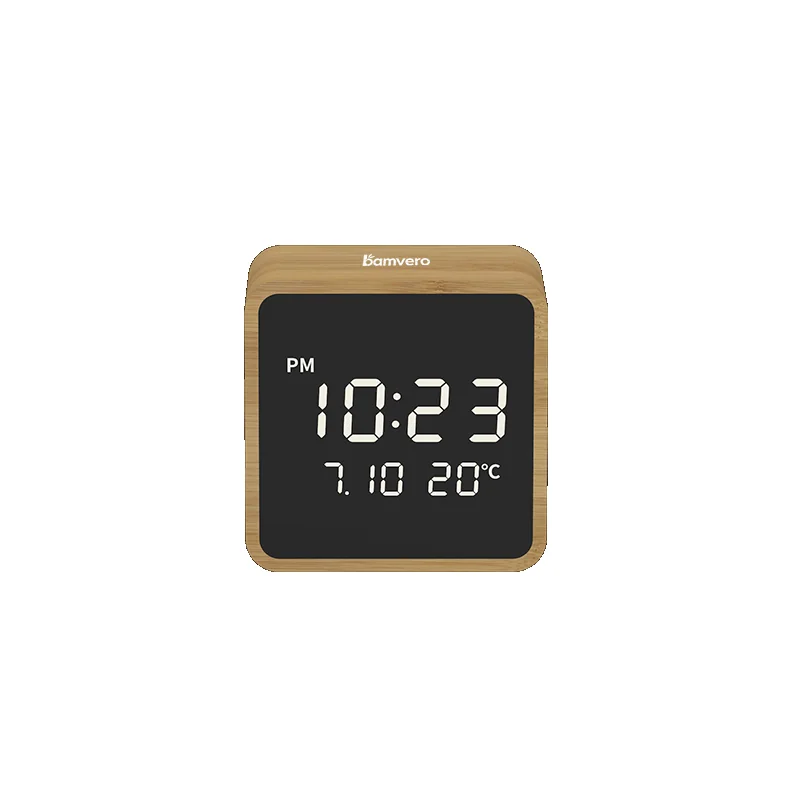
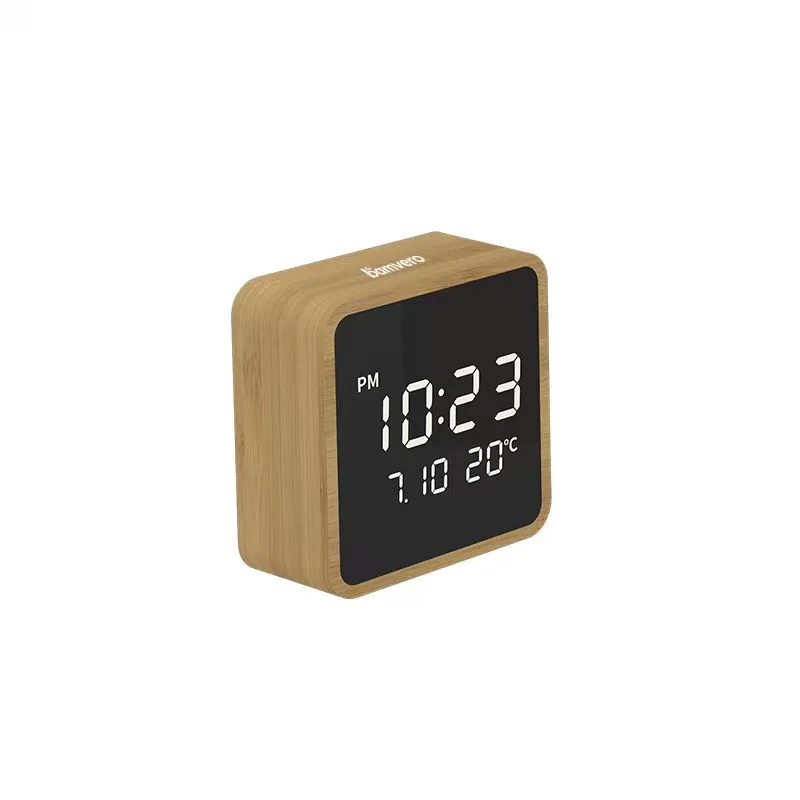
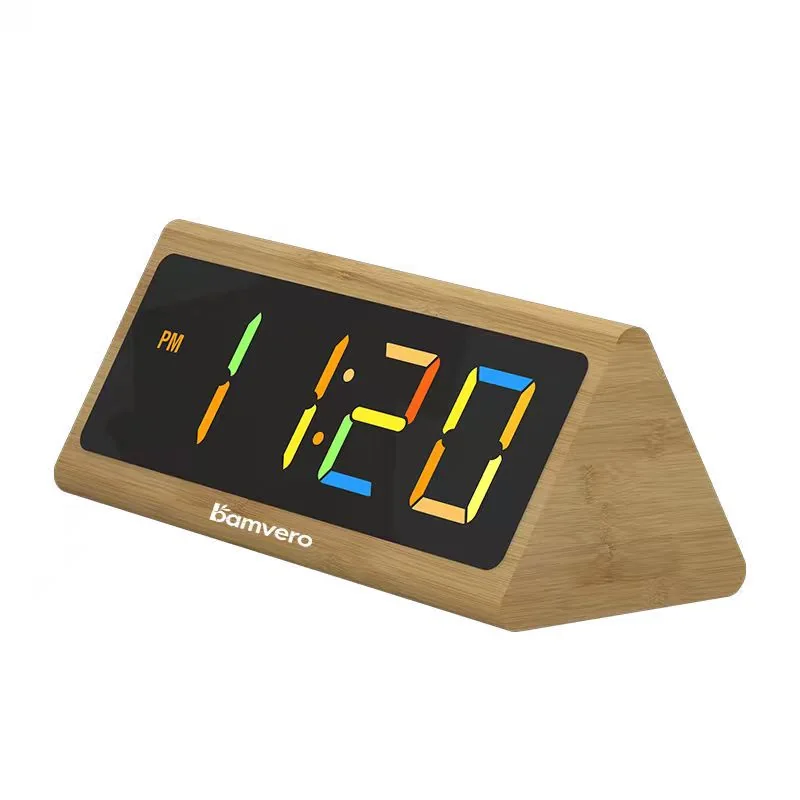
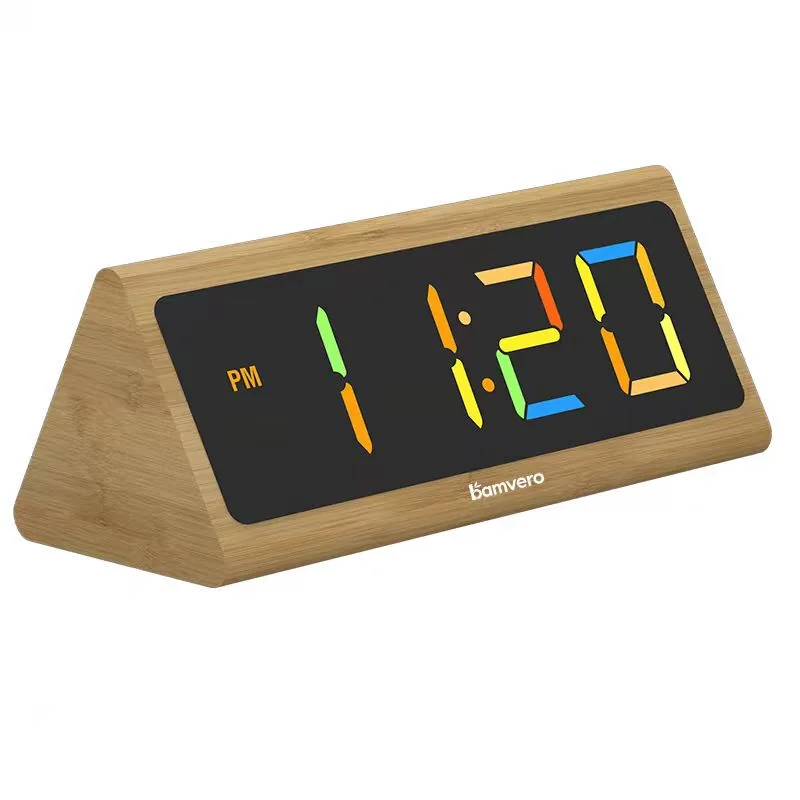
A front-facing product image helps a retail buyer understand the LED display. An angled image explains the bamboo housing and compact shape. Together they make a clearer packaging reference than a generic decorative scene, especially when several team members need to approve the same program.
Retail-ready packaging should protect the product and explain the key value in a short, credible way. Confirm barcode area, labels, inner protection, master-carton quantity and the shipping marks required by the importer.
For gift or hotel programs, request a simple packaging mockup with the actual model image. This is more useful than a generic box layout because it shows the final proportion and logo visibility.
Do not treat packaging as a last step. It affects how buyers present the bamboo material story, how products are handled in transit and how easy the item is to restock.
Approve the logo treatment, manual language, gift-box artwork and carton marks at the same time as the product. This creates one coherent retail story and gives the factory a clear production reference, especially when multiple stakeholders need to sign off on the first order.
Release packaging only after a physical sample review
Digital artwork is important, but it cannot show every question about scale, protection or shelf impact. Keep one approved product sample and one approved packaging sample. Photograph both, note the file version and store them with the reorder record.
Repeat orders become easier when the model, finish and packaging files are stored as one reference set. Keep the approved sample image, artwork version, carton specification and key configuration choices together.
This record reduces unnecessary changes between batches and gives new purchasing contacts a clear route from the original model selection to a repeatable order.
For seasonal or promotional programs, add the confirmed delivery window and any campaign-specific packaging note. This helps the team protect the core product specification while changing only what the market requires.
For future repeats, preserve the selected model, image approval, packaging artwork and any market-specific label notes in one place. That simple record shortens follow-up discussions and helps protect consistency across repeat orders, new retail locations or seasonal gift programs.
Packaging is a sourcing tool, not a last-minute decoration.
When the packaging brief is decided at the same time as the bamboo clock sample, buyer approval becomes faster and the retail outcome is easier to repeat. The product story, visible material and export details should all be traceable in one approval route.